https://www.statista.com/chart/21345/coronavirus-deaths-by-gender/
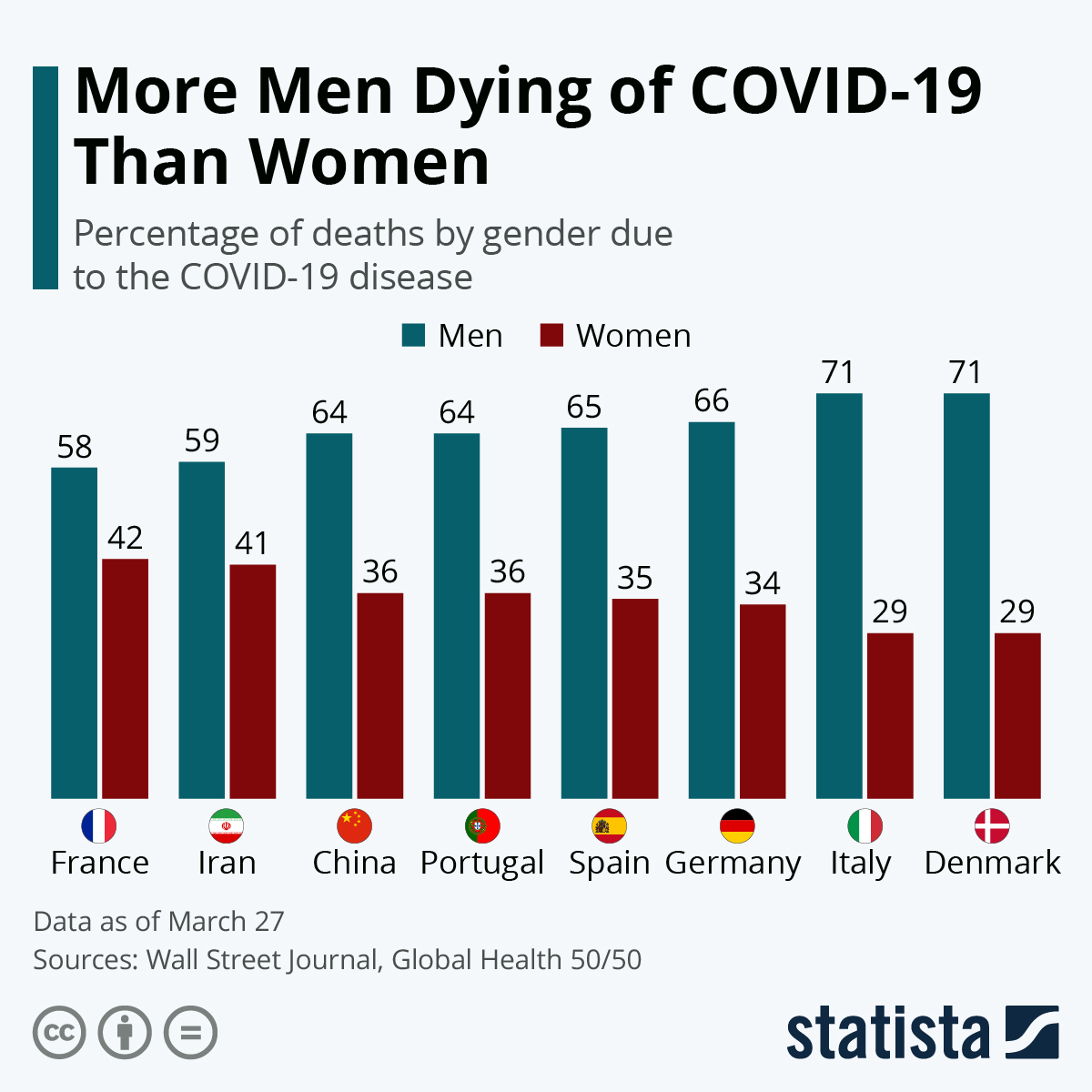
We already know why men are more vulnerable. According to the 2016 study done by researchers at the Department of Molecular Microbiology and Immunology, The Johns Hopkins Bloomberg School of Public Health, Baltimore, Maryland, United States of America,
Progesterone-Based Therapy Protects Against Influenza by Promoting Lung Repair and Recovery in Females. (Olivia J Hall, et al). It is progesterone that helps fight the pneumonia, and someone should give it a try to see if it works to reduce the death rate for men.
We have made the novel observation that administration of progesterone to female mice depleted of progesterone confers protection against both lethal and sublethal influenza A virus infection. In particular, progesterone reduces pulmonary inflammation, improves lung function, repairs the damaged lung epithelium, and promotes faster recovery following influenza A virus infection. Progesterone causes protection against severe outcome from influenza by inducing production of the epidermal growth factor, amphiregulin, by respiratory epithelial cells. This study provides insight into a novel mechanistic role of progesterone in the lungs...I have seen death rate by age and death rate by sex, but not the death rate separated by sex for each age group. If hormones have anything to do with it, the death rate for older group should show similar death rate for men and women. Further more, older women on estradiol + progesterone (natural) may have better chance of surviving Covit-19 pneumonia compared to those who are not. By the same token, younger women with suppressed progesterone may not do well. I wounder anyone care to find out.
So, if you are not in a habit of using progesterone cream to maintain your hormonal balance, old or young, get some progesterone cream to protect yourself now! You don't need prescription to buy it in the U.S.
If you have been using Hydroxychloroquine to cope with Lupus, and cannot get it now because they are trying it on the covit-19 cases, you can try Progesterone, many have been.
I think men can also benefit from it. it's not totally new territory for men. Progesterone + DHEA has been used by many men to cope with andropause. Since progesterone can prevent men's brain from swelling in acute brain injuries (ProTECT: A Randomized Clinical Trial of Progesterone for Acute Traumatic Brain Injury. David W. Wright et al., Ann Emerg Med. 2007) it may also prevent men's lung from swelling in cytokine storm of viral infection. It has no adverse side effect. So, rub some progesterone cream on your skin everyday just in case. It will help you keep calm, too (its well know benefit, it has to be the real natural progesterone, though). But, don't overdose, or you may negate its effect.
If you want to get some perspectives, here is a review article:
Sex Hormones Regulate Innate Immune Cells and Promote Sex Differences in Respiratory Virus Infection

